Technology is evolving faster than at any other moment in history. What once seemed like science fiction — smart homes, artificial intelligence assistants, self-driving cars — is now becoming part of our everyday lives.
But this is just the beginning.
(You will be redirected to another page)
Over the next few years, new innovations will completely transform how we work, communicate, travel, and even take care of our health. Understanding these technologies isn’t just interesting — it’s essential. The people who adapt early gain advantages in careers, business, and daily life.
In this guide, you’ll discover the 10 most important technologies shaping the future, explained in a simple and practical way.
Why Understanding Technology Trends Matters
Before diving into the list, it’s important to understand something:
Technology is no longer optional.
Companies, schools, and governments rely on digital tools for everything. Those who understand how technology works can:
-
Make better career choices
-
Save time with automation
-
Increase productivity
-
Protect their data
-
Spot new business opportunities
In short, tech knowledge equals opportunity.
Now, let’s explore what’s coming next.
(You will be redirected to another page)
1. Artificial Intelligence (AI)
Artificial Intelligence is already everywhere.
Every time Netflix recommends a movie or Google finishes your sentence, AI is working behind the scenes.
But the next generation of AI goes much further.
How AI is changing life:
-
Virtual assistants (ChatGPT, Alexa, Siri)
-
Automated customer service
-
Smart medical diagnoses
-
Personalized education
-
Self-driving vehicles
In the future, AI won’t just assist humans — it will collaborate with us in almost every profession.
2. Internet of Things (IoT)
The Internet of Things connects everyday objects to the internet.
This means devices can talk to each other without human interaction.
Examples you may already use:
-
Smartwatches
-
Smart TVs
-
Security cameras
-
Smart refrigerators
-
Connected cars
Imagine your house automatically adjusting lights, temperature, and security based on your habits. That’s IoT in action.
Experts predict billions of connected devices worldwide, making homes and cities smarter than ever.
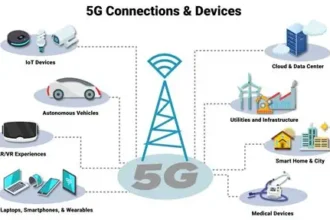
3. 5G and Future 6G Networks
Speed matters.
Slow internet limits innovation. Faster networks unlock possibilities.
5G is already improving:
-
Video streaming
-
Online gaming
-
Remote work
-
Telemedicine
But 6G is being developed and could be 100 times faster than 5G.
This will allow:
-
Real-time virtual reality
-
Remote surgeries
-
Fully autonomous vehicles
-
Smart cities with instant communication
The future will feel almost lag-free.
4. Cloud Computing
Instead of storing files on your computer, everything is moving to the cloud.
Services like:
-
Google Drive
-
Dropbox
-
AWS
-
Microsoft Azure
allow businesses to operate from anywhere.
Why cloud computing matters:
-
Lower costs
-
Remote access
-
Better security
-
Easy scalability
Most modern companies already depend on the cloud — and this trend will only grow.
5. Robotics and Automation
Robots aren’t just for factories anymore.
Today, robots:
-
Deliver food
-
Clean homes
-
Assist surgeries
-
Manage warehouses
Automation is increasing efficiency and reducing repetitive tasks.
While some fear job losses, new roles are also emerging in:
-
Robot maintenance
-
Programming
-
System management
Robotics will change how we work — not eliminate work entirely.
(You will be redirected to another page)
6. Virtual Reality (VR) and Augmented Reality (AR)
VR and AR are merging the digital and physical worlds.
VR examples:
-
Gaming
-
Virtual tourism
-
Training simulations
AR examples:
-
Pokémon Go
-
IKEA furniture previews
-
Smart glasses
Soon, students may attend virtual classrooms, and professionals may hold meetings in digital spaces that feel real.
The line between online and offline life is disappearing.
7. Blockchain Technology
Most people associate blockchain with Bitcoin, but it’s much bigger than cryptocurrency.
Blockchain creates secure, transparent digital records.
Uses include:
-
Financial transactions
-
Contracts
-
Voting systems
-
Identity verification
-
Supply chain tracking
Because data can’t be easily altered, blockchain increases trust and security in digital systems.
Many industries are exploring it beyond finance.
8. Green Technology and Sustainability
Technology isn’t only about speed — it’s also about responsibility.
Green tech focuses on reducing environmental impact.
Examples:
-
Solar panels
-
Electric vehicles
-
Smart energy grids
-
Eco-friendly batteries
Companies are investing heavily in sustainability because consumers demand cleaner solutions.
The future of tech must also be the future of the planet.
9. Cybersecurity Innovations
As technology grows, threats grow too.
Cyberattacks are becoming more sophisticated.
That’s why cybersecurity is one of the fastest-growing industries.
New protections include:
-
Biometric authentication
-
AI-based threat detection
-
Encrypted communications
-
Zero-trust security systems
Learning basic digital safety will be as important as locking your front door.
10. Quantum Computing
Quantum computing may sound complex, but it could revolutionize everything.
Unlike traditional computers, quantum machines can process massive calculations instantly.
This could transform:
-
Drug discovery
-
Weather prediction
-
Financial modeling
-
Space research
Although still developing, quantum computing could solve problems that today’s computers simply cannot handle.
What This Means for You
You don’t need to master every technology.
But you should stay informed.
Here’s how to prepare:
-
Learn basic digital skills
-
Explore online courses
-
Use smart tools daily
-
Follow tech news
-
Stay curious
Technology rewards those who adapt.
Final Thoughts
The future isn’t coming — it’s already here.
Artificial intelligence, smart devices, robotics, and faster networks are reshaping the world around us. These innovations aren’t just trends. They are permanent shifts in how society functions.
The good news?
You don’t need to be an engineer to benefit. Just understanding how these technologies work can give you a powerful advantage.
Stay updated. Keep learning. And most importantly, embrace change.
Because the people who understand technology today will shape tomorrow.
 Keep an eye on this