Edge computing is a way of processing data closer to where it’s created instead of sending everything to distant cloud servers.
In traditional cloud computing, your device sends information to a central server far away.
With side computing, that processing happens nearby — sometimes inside your device or in a local server just a few miles away.
(You will be redirected to another page)
Think of it like this:
Cloud computing = long-distance travel
Side computing = local shortcut
By shortening the distance, responses become faster and more efficient.
The result is less delay, better performance, and a smoother user experience.
Why the Cloud Alone Is No Longer Enough
Cloud computing is still powerful and essential.
But modern applications demand something faster.
Today we use:
Real-time video calls
Autonomous vehicles
Smart homes
Online gaming
Streaming platforms
AI-powered apps
Medical monitoring devices
All these technologies require immediate responses.
If there’s even a small delay, the experience suffers — or worse, becomes dangerous.
For example:
A self-driving car cannot wait two seconds for a cloud server to respond.
A heart monitor cannot delay sending emergency alerts.
A factory robot cannot freeze because of network lag.
These situations require instant processing.
And that’s exactly what edge computing delivers.
How Edge Computing Works in Practice
Instead of sending every piece of data to a central data center, information is processed at the “edge” of the network.
The side could be:
Your smartphone
A local server
A router
A nearby data center
A smart device itself
Only important or summarized data is then sent to the cloud.
This reduces traffic and speeds everything up.
For example:
A security camera using side computing can detect motion locally instead of uploading every second of footage to the cloud.
It sends alerts only when something important happens.
This saves bandwidth and delivers faster notifications.
(You will be redirected to another page)
Everyday Examples You Already Use
Many people think edge computing is futuristic.
But it’s already here.
When your smart speaker responds instantly to “Hey Alexa,” part of that processing happens locally.
When Netflix adjusts video quality automatically, edge servers near your city help reduce buffering.
When Google Maps updates traffic in real time, local processing helps deliver faster routes.
Even mobile networks use edge computing to improve speed and reliability.
So even if you didn’t notice, you’re already benefiting from it daily.
The Role of 5G and IoT
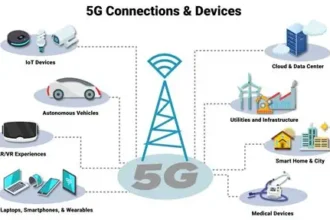
Edge computing becomes even more powerful when combined with 5G and IoT devices.
5G provides extremely fast internet with low latency.
IoT connects billions of smart devices.
But if all those devices sent data to the cloud at once, networks would collapse.
Edge computing solves this by processing data locally first.
This creates a perfect trio:
5G = faster connections
IoT = more devices
Edge = faster local decisions
Together, they enable smart cities, autonomous cars, and advanced healthcare systems.
Benefits of Edge Computing
One of the biggest advantages is speed.
Since data doesn’t travel far, responses happen almost instantly.
Another benefit is reliability.
If the internet connection fails, local systems can still work.
Security also improves.
Sensitive data can stay local instead of traveling across the internet.
Costs decrease too.
Sending less data to the cloud reduces bandwidth and storage expenses.
All of these factors make edge computing not just faster, but smarter.
(You will be redirected to another page)
Industries Being Transformed
Side computing isn’t just for tech companies.
Many industries are adopting it.
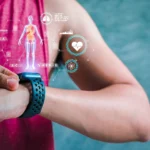
Healthcare uses it for real-time patient monitoring.
Manufacturing uses it for smart factories and predictive maintenance.
Retail stores use it for cashier-less checkouts and inventory tracking.
Transportation relies on it for traffic systems and autonomous vehicles.
Even agriculture benefits from smart sensors analyzing soil and weather conditions locally.
In short, almost every industry is finding ways to use edge technology.
Is Edge Computing the Future?
The truth is, it’s not replacing the cloud.
It’s complementing it.
The future is a hybrid model.
Cloud handles heavy processing and storage.
Edge handles real-time decisions.
This balance gives us the best of both worlds.
As more devices connect to the internet, this approach will become standard.
Experts predict billions of edge devices in the next few years.
So learning about this technology now helps you understand where the digital world is heading.
Final Thoughts
Side computing might not be as famous as AI or blockchain, but it’s just as important.
It’s the invisible force making technology faster, safer, and more reliable.
From streaming movies to saving lives in hospitals, its impact is already huge.
And it will only grow.
The next time an app responds instantly or your smart device feels incredibly fast, remember:
It’s probably edge computing working behind the scenes.
Technology doesn’t always need to go farther.
Sometimes, the smartest solution is simply bringing it closer.
 Keep an eye on this