You’ve probably heard about 5G in advertisements, smartphones, or news headlines promising “ultra-fast speeds” and “the future of connectivity.” But what does 5G really mean in practice? Is it just faster internet, or does it go much deeper than that?
The truth is that 5G is not simply an upgrade. It’s a complete transformation in how devices communicate, how businesses operate, and how entire cities function. From autonomous vehicles to smart homes and remote surgeries, 5G is laying the foundation for a smarter and more connected world.
(You will be redirected to another page)
In this guide, you’ll learn what 5G technology is, how it works, why it’s so much faster, and how it will impact your daily life and the future of mobile networks.
What Is 5G Technology?
5G stands for “fifth generation” mobile network technology. It is the latest evolution of wireless communication systems that connect smartphones, computers, and smart devices to the internet.
Each generation of mobile networks brought significant improvements. 3G introduced mobile internet access. 4G made streaming and apps fast and reliable. Now, 5G takes connectivity to a completely new level by delivering extremely high speeds, ultra-low latency, and the ability to connect millions of devices simultaneously.
Unlike previous generations that focused mainly on faster downloads, 5G is designed to support modern technologies such as artificial intelligence, the Internet of Things (IoT), smart cities, and advanced automation.
In simple terms, 5G doesn’t just make your phone faster. It makes everything around you smarter and more connected.
Why 5G Is More Than Just Faster Internet
Many people assume 5G is only about speed, but that’s just one part of the story. The real revolution lies in three key improvements: speed, latency, and capacity.
Speed refers to how fast data is transferred. Latency is the time it takes for devices to respond. Capacity means how many devices can connect at once without slowing down.
While 4G networks may struggle in crowded places like stadiums or concerts, 5G can handle thousands of users simultaneously with stable performance. This makes it ideal for today’s hyper-connected world.
Because of these improvements, 5G enables entirely new use cases that were impossible before.
(You will be redirected to another page)
How 5G Technology Works
5G uses a combination of advanced technologies to deliver better performance. One of the main innovations is the use of higher-frequency radio waves, called millimeter waves, which can carry more data at faster speeds.
However, these waves don’t travel as far as traditional signals. To solve this, 5G networks use many small cell towers placed closer together. These small cells ensure consistent coverage even in dense urban areas.
Another key technology is Massive MIMO (Multiple Input, Multiple Output), which allows antennas to send and receive multiple data streams at the same time. This dramatically improves efficiency.
Beamforming is also important. Instead of broadcasting signals in all directions, 5G directs signals precisely toward devices, reducing interference and improving speed.
Together, these innovations create a network that is faster, smarter, and more reliable.
Key Benefits of 5G Connectivity
The advantages of 5G go far beyond faster downloads. One of the biggest benefits is ultra-low latency. In some cases, response times can be as low as one millisecond. This is almost instant.
Another benefit is higher reliability. Connections remain stable even in crowded areas.
Energy efficiency also improves, especially for IoT devices that need long battery life.
In addition, 5G supports massive device connectivity. Smart homes, factories, and cities can run thousands of connected sensors simultaneously.
All these benefits combine to create a smoother digital experience for both individuals and businesses.
Real-World Applications of 5G Technology
5G is already changing industries around the world.
In healthcare, doctors can perform remote surgeries using robotic systems with near-zero delay. Real-time patient monitoring also becomes more accurate and reliable.
In transportation, self-driving cars rely on instant communication with traffic systems and other vehicles to avoid accidents. 5G makes this possible.
In entertainment, gamers experience near-zero lag, and streaming services can deliver ultra-high-definition content without buffering.
Smart cities use 5G to manage traffic lights, waste collection, public safety systems, and energy grids more efficiently.
Factories use connected machines and sensors to automate production lines and predict maintenance needs before failures happen.
These examples show how 5G is powering the next generation of innovation.
(You will be redirected to another page)
Step-by-Step: How 5G Improves Your Daily Life
Even if you’re not working in tech, 5G affects your everyday activities.
First, your smartphone downloads and uploads data much faster, making videos, apps, and cloud storage smoother.
Second, video calls become clearer and more stable, even in crowded places.
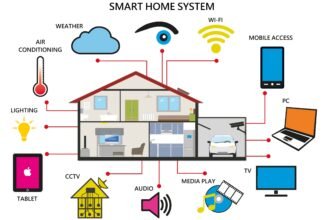
Third, smart home devices respond instantly, from voice assistants to security cameras.
Fourth, remote work becomes easier thanks to reliable cloud access and fast file transfers.
Finally, new services like augmented reality shopping, immersive learning, and virtual events become practical and enjoyable.
In short, daily digital experiences become faster, simpler, and more reliable.
Tips to Take Advantage of 5G
To fully benefit from 5G, there are a few steps you can take.
Make sure your device supports 5G connectivity. Older smartphones may not be compatible.
Choose a mobile plan that includes 5G coverage in your area.
Keep your apps and software updated to use modern features optimized for faster networks.
Explore new tools such as cloud gaming, smart home systems, and high-quality streaming services.
By upgrading both hardware and habits, you can unlock the full potential of the new network.
Common Challenges and Limitations
Despite its advantages, 5G isn’t perfect yet.
Coverage is still expanding, especially in rural areas.
Infrastructure costs are high because many small towers are required.
Some devices consume more battery when using 5G.
In certain cases, walls and obstacles can block high-frequency signals.
However, these challenges are temporary. As networks expand and technology improves, these issues will gradually disappear.
Frequently Asked Questions (FAQ)
Is 5G really faster than 4G?
Yes. 5G can be up to 10–100 times faster depending on conditions.
Do I need a new phone for 5G?
Yes. Only 5G-compatible devices can access the network.
Is 5G safe?
Yes. 5G operates within international safety standards for radio frequencies.
Will 5G replace Wi-Fi?
Not completely. Both technologies will coexist and complement each other.
Is 5G available everywhere?
Not yet. Coverage is expanding year by year.
Final Thoughts: Why 5G Is the Foundation of the Connected Future
5G technology represents much more than a faster mobile signal. It’s the infrastructure that will power the next wave of digital transformation. From smart cities and autonomous vehicles to remote work and immersive entertainment, 5G is creating possibilities that were once considered science fiction.
As adoption grows, we’ll see faster innovation, better services, and entirely new industries emerge. Understanding 5G today means being prepared for the future tomorrow.
If the last decade was about connecting people to the internet, the next decade will be about connecting everything. And 5G is the technology making that future possible.
 Keep an eye on this