Not long ago, artificial intelligence sounded like something reserved for scientists, tech labs, or futuristic movies. People imagined robots walking around cities or machines replacing humans completely. For most families, AI felt distant and irrelevant to daily life.
But here’s the truth: artificial intelligence is already part of your routine — even if you don’t notice it.
(You will be redirected to another page)
Every time Netflix recommends a movie you end up loving, when Google finishes your sentence while typing, or when your bank detects suspicious activity on your card, artificial intelligence is quietly working in the background.
AI is no longer a technology of the future. It’s the invisible engine powering the present.
And understanding how it works is becoming just as important as knowing how to use the internet or a smartphone. In this article, you’ll discover how artificial intelligence is transforming everyday life, why companies are investing billions in it, and how you can benefit personally and professionally from this revolution.
What Is Artificial Intelligence in Simple Terms?
Artificial intelligence refers to computer systems that can simulate human intelligence. Instead of simply following fixed instructions, these systems learn from data, recognize patterns, and make decisions.
Think of it this way: traditional software follows rules. AI learns behaviors.
For example, a normal calculator only performs the operations you type. But an AI-powered app can study your spending habits and predict your monthly expenses automatically.
This ability to learn and improve over time is what makes AI so powerful.
It’s not just programming — it’s adaptation.
And that’s exactly why artificial intelligence is spreading into almost every industry.
(You will be redirected to another page)
How AI Is Already Part of Your Daily Routine
Many people believe they don’t use artificial intelligence, but they interact with it dozens of times a day without realizing it.
When you unlock your phone using your face, AI is recognizing your features. When Spotify suggests songs that match your taste, AI analyzes your listening history. When Google Maps avoids traffic and finds a faster route, AI processes millions of data points in seconds.
Even social media feeds are controlled by algorithms that learn what type of content keeps you engaged longer.
Artificial intelligence is quietly optimizing your experience everywhere.
The goal isn’t to replace humans — it’s to make technology more intuitive and personalized.
AI at Work: Transforming Jobs and Businesses
The workplace is one of the areas most impacted by artificial intelligence.
Companies now use AI to automate repetitive tasks that used to take hours. Customer support is handled by chatbots. Marketing campaigns are optimized automatically. Financial systems analyze risks in real time.
This allows businesses to save money and become more efficient.
For employees, this shift brings both challenges and opportunities.
Simple and repetitive jobs are being automated, but new roles are emerging that didn’t exist before. Positions like data analyst, AI specialist, automation manager, and machine learning engineer are growing rapidly.
Even traditional careers are changing. Designers use AI tools to create faster. Writers use AI for research. Doctors use AI to detect diseases earlier. Engineers use AI simulations to test ideas instantly.
Learning how to work alongside AI is quickly becoming one of the most valuable professional skills.
Those who adapt will have more opportunities, higher salaries, and greater job security.
Smarter Shopping and Personalized Experiences
Have you ever wondered how online stores seem to know exactly what you want?
That’s artificial intelligence at work.
E-commerce platforms analyze your clicks, searches, and purchases to create highly personalized recommendations. Instead of browsing thousands of products, you see items that match your style and budget.
This makes shopping faster and more convenient.
Banks and fintech apps also use AI to analyze spending habits, detect fraud, and suggest better financial decisions. Some apps can even predict when you might run out of money and alert you in advance.
Streaming services, online ads, and delivery apps all rely on similar systems.
The modern digital world is increasingly customized — and AI is the reason.
AI in Healthcare: Saving Lives with Data
One of the most impressive uses of artificial intelligence is in healthcare.
Doctors and hospitals now use AI systems to analyze medical images, detect early signs of diseases, and recommend treatments. In many cases, AI can identify problems faster and more accurately than humans.
For example, some AI tools can detect tumors in X-rays or MRIs with incredible precision. Others predict health risks based on patient history and lifestyle data.
During emergencies, AI helps optimize ambulance routes and hospital resources.
This technology doesn’t replace doctors, but it gives them better information to make life-saving decisions.
As AI continues to improve, healthcare will become faster, cheaper, and more accessible for everyone.
(You will be redirected to another page)
The Rise of Smart Assistants and Home Automation
Virtual assistants like Alexa, Google Assistant, and Siri are perfect examples of AI becoming part of everyday life.
You can ask questions, set reminders, control lights, play music, or manage your schedule — all using your voice.
Behind these simple interactions is complex artificial intelligence that understands language, context, and preferences.
Over time, these systems learn your habits and become more helpful.
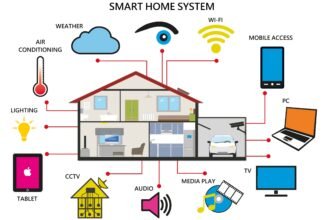
Combined with smart home devices, AI can automatically adjust temperatures, turn off unused appliances, and improve energy efficiency.
Homes are becoming smarter and more responsive.
Technology is no longer something you manually control — it works with you naturally.
Is Artificial Intelligence Safe?
Whenever new technology appears, concerns follow. Many people worry about privacy, job loss, or machines becoming too powerful.
These concerns are valid and deserve attention.
That’s why governments and companies are working on regulations and ethical guidelines to ensure AI is used responsibly. Transparency, data protection, and human oversight are becoming essential parts of AI development.
For everyday users, simple precautions like strong passwords, trusted apps, and software updates already provide good protection.
Like any tool, AI can be harmful if misused — but when used correctly, it offers enormous benefits.
The key is education and awareness.
How You Can Prepare for an AI-Driven Future
The good news is that you don’t need to be a programmer to benefit from artificial intelligence.
Simply understanding how it works already gives you an advantage.
You can start by exploring AI tools that improve productivity, learning basic digital skills, and staying updated with technology trends. Many free online courses teach AI fundamentals in simple language.
Professionals who know how to use AI tools work faster, produce better results, and stand out in the job market.
In the near future, knowing how to collaborate with AI will be as important as knowing how to use a computer today.
The earlier you adapt, the better positioned you’ll be.
Final Thoughts
Artificial intelligence is not a distant concept or a futuristic fantasy anymore. It’s already woven into the fabric of daily life.
From the moment you wake up and check your phone to the time you stream a movie at night, AI is helping, analyzing, predicting, and optimizing your experience.
It makes services faster, businesses smarter, and life more convenient.
And this transformation is only beginning.
Instead of fearing artificial intelligence, the smartest move is to understand it and use it to your advantage.
Because the future won’t belong to people who compete with AI — it will belong to those who learn how to work alongside it.
 Keep an eye on this