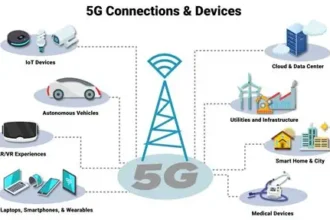
Technology is no longer limited to smartphones and computers. Today, entire homes can be connected, automated, and controlled with just a tap on a screen or a simple voice command. Lights turn on automatically, doors lock themselves, cameras stream live footage to your phone, and thermostats learn your habits to save energy without you even noticing.
This is the world of smart homes, powered by a concept called the Internet of Things (IoT)
(You will be redirected to another page)
If you’ve ever wondered how Alexa turns off your lights, how your doorbell sends video to your phone, or how devices “talk” to each other inside your house, this guide will explain everything in simple terms. By the end of this article, you’ll understand how smart home devices work, what technologies make them possible, and how to safely build your own connected home.
What Is a Smart Home?
A smart home is a house equipped with devices that connect to the internet and can be controlled remotely or automatically.
Instead of manually flipping switches or adjusting settings, you can:
-
Control lights from your phone
-
Lock doors remotely
-
Monitor security cameras anywhere
-
Schedule appliances to run automatically
-
Use voice assistants like Alexa or Google Assistant
The main idea is simple: make everyday tasks easier, faster, and more efficient through automation.
Smart houses save time, improve security, and often reduce energy consumption. That’s why this technology has become one of the fastest-growing sectors in consumer electronics worldwide.
What Is IoT (Internet of Things)?
To understand smart houses, you first need to understand IoT.
The Internet of Things refers to physical objects connected to the internet that can send and receive data.
These objects include:
-
Light bulbs
-
Thermostats
-
Cameras
-
Door locks
-
Refrigerators
-
TVs
-
Washing machines
Unlike traditional devices, IoT devices don’t just perform actions — they also collect information and communicate with other devices.
For example:
A smart thermostat detects room temperature, sends data to an app, and automatically adjusts the heating system.
That communication between devices is what makes IoT powerful.
(You will be redirected to another page)
How Smart Home Devices Actually Work
Even though smart homes feel magical, the technology behind them follows a simple process. Most smart devices work using four basic components.
First, they use sensors to collect information. Sensors detect things like motion, light, temperature, or sound. For example, a motion sensor detects when someone enters a room.
Second, the device uses connectivity, usually Wi-Fi or Bluetooth, to send that data to the cloud or a central hub.
Third, software or apps process the information and decide what action should happen. If motion is detected, the system may turn on lights automatically.
Finally, automation or commands trigger the action. The light turns on, a notification is sent, or a camera starts recording.
So the full cycle looks like this:
Sense → Send data → Process → Act
This happens in seconds, often instantly.
Main Types of Smart Home Devices
There are many categories of smart house products available today. Each one serves a different purpose.
Smart lighting systems allow you to control brightness, colors, and schedules. You can program lights to turn off automatically when you leave home or change colors for different moods.
Smart speakers and voice assistants act as control centers. Devices like Amazon Echo or Google Nest let you use voice commands to manage your entire house.
Smart security devices include cameras, video doorbells, alarms, and smart locks. These increase home protection and allow real-time monitoring from anywhere.
Smart thermostats help regulate temperature efficiently. They learn your habits and reduce energy use when you’re not home.
Smart appliances like refrigerators, washing machines, and robotic vacuums automate everyday chores and improve convenience.
Together, these devices create a connected ecosystem that simplifies daily life.
The Role of Wi-Fi and Smart Hubs
Most smart house devices rely on Wi-Fi networks to communicate. Your home router connects devices to the internet, allowing remote control through apps.
However, when many devices are connected, networks can become overloaded. That’s where smart hubs come in.
A hub acts like a traffic controller. Instead of each device connecting separately to Wi-Fi, they connect to the hub, which manages communication more efficiently.
Popular hubs include:
-
Samsung SmartThings
-
Amazon Echo Hub
-
Apple HomePod (HouseKit)
Hubs improve speed, stability, and compatibility between different brands.
If you plan to build a larger smart home system, a hub is often a smart investment.
(You will be redirected to another page)
Benefits of Smart Home Technology
Smart houses aren’t just trendy gadgets. They provide real practical advantages.
Convenience is the biggest benefit. You can control everything from one app or with your voice.
Energy savings are another major advantage. Smart thermostats and lighting reduce electricity bills by running only when needed.
Security improves significantly with real-time monitoring, alerts, and remote access.
Accessibility is also important. Elderly or disabled individuals can control devices easily without moving around.
Finally, automation reduces daily stress. Small tasks like turning off lights or locking doors happen automatically.
Over time, these small improvements make life noticeably easier.
Are Smart Homes Safe?
Security is a common concern with connected devices. After all, anything connected to the internet can be vulnerable.
The good news is that most major brands use strong encryption and protection systems. However, users must also follow basic safety practices.
Always use strong passwords for devices and apps. Avoid default credentials.
Keep software and firmware updated. Updates often fix security issues.
Use secure Wi-Fi networks with modern encryption like WPA3.
Avoid buying extremely cheap unknown brands that may lack proper protection.
When used responsibly, smart homes are generally safe and reliable.
How to Start Building a Smart Home (Step by Step)
If you’re new to smart houses, don’t try to automate everything at once. Start small.
Begin with one or two simple devices, like smart bulbs or a smart speaker. These are affordable and easy to install.
Next, add security features such as a camera or video doorbell.
After that, consider energy-saving devices like a thermostat or smart plugs.
Gradually expand your system as you learn what fits your lifestyle.
Choosing products from the same ecosystem (Google, Amazon, or Apple) helps ensure compatibility and easier control.
Building slowly prevents frustration and unnecessary spending.
The Future of Smart Homes
Smart house technology is evolving rapidly.
Artificial intelligence is making devices smarter and more predictive. Homes will soon learn routines automatically without manual setup.
Voice assistants are becoming more natural and conversational.
Energy management systems will optimize electricity usage even further.
Integration with electric vehicles, solar panels, and smart cities is also increasing.
In the future, connected homes will feel less like technology and more like invisible helpers working quietly in the background.
What feels advanced today will soon become standard in most households.
Final Thoughts
Smart home technology may seem complex at first, but the concept is surprisingly simple. Devices collect information, communicate through the internet, and automate everyday tasks to make life easier.
Whether it’s turning on lights automatically, improving security, or saving energy, IoT devices bring real benefits that go beyond convenience.
You don’t need technical knowledge to start. With just a few affordable products and a stable Wi-Fi connection, anyone can begin building a connected home.
As technology continues to evolve, smart homes will become even more intelligent, efficient, and accessible.
If you’re curious about the future of technology, your home might be the best place to start experiencing it today.
 Keep an eye on this