Artificial Intelligence, often called AI, has quickly moved from science fiction into everyday life. What once seemed like futuristic technology is now present in the apps we use, the websites we browse, and even the way businesses operate. From voice assistants that answer questions instantly to recommendation systems that suggest what to watch next, AI is quietly working behind the scenes to make digital experiences smarter, faster, and more personalized.
But despite how common the term has become, many people still don’t fully understand what Artificial Intelligence actually is or how it works. Is it the same as robots? Does it think like humans? Is it something only big tech companies use? The truth is much simpler and much more practical. AI is not magic or consciousness. It is a set of technologies that allow computers to learn from data, recognize patterns, and make decisions with minimal human intervention.
(You will be redirected to another page)
In this beginner-friendly guide, you will learn what Artificial Intelligence really means, how it works step by step, the different types of AI systems, and how this technology is already being used in the real world. By the end, you’ll have a clear understanding of why AI is one of the most important innovations of our time.
What Is Artificial Intelligence?
Artificial Intelligence refers to the ability of machines or computer systems to perform tasks that normally require human intelligence. These tasks include learning, problem-solving, recognizing speech, understanding language, identifying images, and making decisions.
In simple terms, AI allows computers to behave in “smart” ways. Instead of following only fixed instructions written by programmers, AI systems can analyze information, adapt to new data, and improve their performance over time.
For example, a traditional computer program might follow strict rules: if X happens, do Y. But an AI system can look at thousands or millions of examples and figure out patterns on its own. This ability to learn from experience is what makes AI so powerful and flexible.
How Artificial Intelligence Works
At its core, AI works by combining three main elements: data, algorithms, and computing power.
First, data is collected. This data can be anything from text and images to numbers, sounds, or user behavior. The more high-quality data an AI system has, the better it can learn. For instance, a facial recognition system might be trained with millions of photos of faces.
Next, algorithms process this data. Algorithms are mathematical instructions that help the system detect patterns and relationships. They analyze the input information and create models that can make predictions or decisions.
Finally, computing power allows the system to perform these calculations quickly. Modern AI relies on powerful processors and cloud computing to handle massive amounts of data efficiently.
Over time, the AI model improves by comparing its predictions with real outcomes. When it makes mistakes, it adjusts itself. This process is called training. The more training it receives, the more accurate the system becomes.
(You will be redirected to another page)
AI vs Machine Learning vs Deep Learning
Many people use terms like AI, Machine Learning, and Deep Learning interchangeably, but they are not exactly the same.
Artificial Intelligence is the broad field that covers all technologies designed to simulate human intelligence.
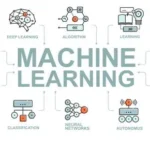
Machine Learning is a subset of AI. It focuses specifically on teaching computers to learn from data without being explicitly programmed for every task. Most modern AI applications rely heavily on machine learning.
Deep Learning is a specialized form of machine learning that uses neural networks inspired by the human brain. It is particularly effective for tasks like image recognition, speech processing, and natural language understanding.
Think of it like this: AI is the big umbrella, Machine Learning sits underneath it, and Deep Learning is an even more advanced branch within Machine Learning.
Types of Artificial Intelligence
AI systems can be divided into different types based on their capabilities.
The most common type today is Narrow AI, also called Weak AI. These systems are designed to perform one specific task very well. Examples include voice assistants like Alexa, recommendation systems on Netflix, or spam filters in email. They are smart within a limited area but cannot think beyond their programming.
The next level is General AI, sometimes called Strong AI. This would be a system capable of performing any intellectual task a human can do. It could reason, learn, and adapt across many different areas. However, General AI does not yet exist and remains mostly theoretical.
The final stage is Superintelligent AI, which would surpass human intelligence entirely. This concept is still science fiction and raises many ethical and safety questions.
For now, almost all AI we use daily belongs to the Narrow AI category.
Real-World Applications of Artificial Intelligence
Artificial Intelligence is already transforming many industries and aspects of daily life.
In healthcare, AI helps doctors analyze medical images, detect diseases early, and develop personalized treatment plans. Some systems can identify tumors or abnormalities faster than humans.
In finance, banks use AI to detect fraud, assess credit risk, and automate customer service. Smart algorithms monitor transactions in real time to identify suspicious activity.
In transportation, AI powers self-driving cars, route optimization, and traffic prediction systems. These technologies aim to reduce accidents and improve efficiency.
In retail and e-commerce, AI recommends products based on your browsing history, manages inventory, and improves customer experiences with chatbots.
In education, AI supports personalized learning platforms that adapt to each student’s pace and style, helping them understand concepts more effectively.
Even social media platforms use AI constantly to sort content, filter spam, and recommend posts or videos you might enjoy.
Benefits of Artificial Intelligence
The rapid growth of AI brings many advantages. It can automate repetitive tasks, saving time and reducing costs. It can analyze huge amounts of information much faster than humans. It improves accuracy in areas like medical diagnosis or fraud detection. It also helps businesses make better decisions based on data instead of guesswork.
For individuals, AI often means more convenience. Voice assistants, smart homes, and personalized recommendations make everyday life easier and more efficient.
Challenges and Concerns About AI
Despite its benefits, AI also presents challenges. Privacy is a major concern because many AI systems rely on personal data. There is also the risk of bias if the training data is unfair or incomplete, leading to incorrect or discriminatory results.
Another common worry is job displacement. As automation increases, some repetitive roles may disappear. However, AI also creates new career opportunities in technology, data science, and engineering.
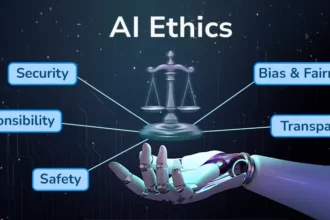
Ethical considerations are becoming increasingly important. Developers and governments must ensure that AI is used responsibly, transparently, and safely.
(You will be redirected to another page)
How to Start Learning Artificial Intelligence
If you are interested in AI, getting started is easier than ever. Learning basic programming, especially Python, is a great first step. Understanding math concepts like statistics and probability also helps.
There are many free online courses, tutorials, and platforms where beginners can experiment with AI tools. Frameworks like TensorFlow, PyTorch, and Google Colab allow you to build simple projects even without expensive hardware.
Starting with small experiments, such as creating a simple chatbot or analyzing data, can help you build practical experience quickly.
Final Thoughts
Artificial Intelligence is not just a buzzword or futuristic idea. It is a practical technology that is already shaping how we work, communicate, shop, learn, and live. By understanding what AI is and how it works, you become better prepared for a world where smart systems play an increasingly important role.
Whether you want to use AI in your career, start a business, or simply understand modern technology better, learning the basics is a valuable investment. The future is becoming more intelligent every day, and those who understand AI will be better equipped to adapt and thrive in this rapidly changing digital landscape.
 Keep an eye on this