If you stop for a moment and look around you, almost everything you see exists because of engineering. The house you live in, the roads you travel on, your smartphone, your internet connection, clean water systems, hospitals, airplanes, and even renewable energy solutions — all of these are the result of engineering work. Yet many people still don’t fully understand what engineering really is or how it works in practice.
(You will be redirected to another page)
Some think engineering is only about complex math or difficult calculations. Others believe it’s limited to building bridges or fixing machines. In reality, engineering is much broader, more creative, and more impactful than most people imagine. It is the field responsible for turning ideas into real-world solutions that improve everyday life.
In this complete beginner’s guide, you’ll learn what engineering actually means, how engineers solve problems, what the main branches of engineering are, and how you can start a career in this powerful and future-proof profession.
What is engineering?
Engineering is the application of science, mathematics, and technology to design, build, and improve systems, structures, and products that solve real problems. In simple terms, engineers use knowledge and creativity to make things work better.
While scientists often focus on discovering how the world works, engineers focus on using that knowledge to create practical solutions. For example, a scientist might study how electricity behaves, while an electrical engineer designs power grids that deliver electricity safely to millions of homes.
Engineering is not only technical — it’s also highly creative. Engineers constantly design new solutions, improve existing systems, and adapt technologies to meet human needs. Every time a process becomes faster, safer, cheaper, or more efficient, engineering is likely behind it.
(You will be redirected to another page)
How engineering works in real life
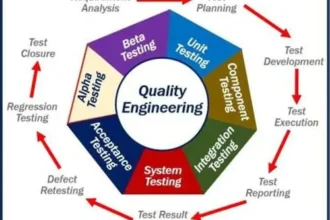
At its core, engineering follows a structured problem-solving process. Engineers don’t simply guess solutions. Instead, they use logical steps to analyze problems and create reliable results.
The typical engineering process looks like this. First, the problem is identified. This might involve understanding why traffic congestion is increasing in a city or why a machine is wasting energy. Next, engineers research possible solutions and gather data. Then, they design and plan a system or product that addresses the issue.
After the design stage, prototypes or models are built and tested. If something doesn’t work as expected, improvements are made. Finally, the solution is implemented in the real world and continuously monitored for performance.
This process ensures safety, efficiency, and reliability. It’s why airplanes can fly safely, buildings don’t collapse, and software systems run smoothly.
The main fields of engineering
Engineering is divided into several branches, each focused on different types of problems and technologies. Understanding these areas helps beginners choose the path that best fits their interests.
Civil engineering is responsible for infrastructure. Civil engineers design and build roads, bridges, buildings, tunnels, dams, and water systems. Without them, cities simply wouldn’t function. If you’ve ever driven on a highway or walked through a safe building, you’ve experienced the work of civil engineers.
Mechanical engineering focuses on machines and physical systems. Mechanical engineers design engines, vehicles, industrial equipment, elevators, and manufacturing tools. They work with motion, heat, energy, and mechanics. This is one of the oldest and most versatile engineering fields.
Electrical engineering deals with electricity, electronics, and power systems. These professionals design circuits, communication systems, renewable energy solutions, and electrical networks. Everything from your smartphone charger to large power plants depends on electrical engineers.
Industrial engineering is centered on efficiency and optimization. Industrial engineers improve processes in factories, hospitals, and businesses. They reduce waste, save time, and increase productivity. Their work helps companies operate more smoothly and profitably.
Software and computer engineering focuses on digital systems. These engineers create apps, websites, operating systems, artificial intelligence tools, and cybersecurity solutions. As the world becomes more digital, this field continues to grow rapidly.
There are also many specialized areas like chemical engineering, environmental engineering, biomedical engineering, aerospace engineering, and robotics engineering. Each one addresses specific industries and technologies.
How engineering works in real life
At its core, engineering follows a structured problem-solving process. Engineers don’t simply guess solutions. Instead, they use logical steps to analyze problems and create reliable results.
The typical engineering process looks like this. First, the problem is identified. This might involve understanding why traffic congestion is increasing in a city or why a machine is wasting energy. Next, engineers research possible solutions and gather data. Then, they design and plan a system or product that addresses the issue.
After the design stage, prototypes or models are built and tested. If something doesn’t work as expected, improvements are made. Finally, the solution is implemented in the real world and continuously monitored for performance.
This process ensures safety, efficiency, and reliability. It’s why airplanes can fly safely, buildings don’t collapse, and software systems run smoothly.
The main fields of engineering
Engineering is divided into several branches, each focused on different types of problems and technologies. Understanding these areas helps beginners choose the path that best fits their interests.
Civil engineering is responsible for infrastructure. Civil engineers design and build roads, bridges, buildings, tunnels, dams, and water systems. Without them, cities simply wouldn’t function. If you’ve ever driven on a highway or walked through a safe building, you’ve experienced the work of civil engineers.
Mechanical engineering focuses on machines and physical systems. Mechanical engineers design engines, vehicles, industrial equipment, elevators, and manufacturing tools. They work with motion, heat, energy, and mechanics. This is one of the oldest and most versatile engineering fields.
Electrical engineering deals with electricity, electronics, and power systems. These professionals design circuits, communication systems, renewable energy solutions, and electrical networks. Everything from your smartphone charger to large power plants depends on electrical engineers.
Industrial engineering is centered on efficiency and optimization. Industrial engineers improve processes in factories, hospitals, and businesses. They reduce waste, save time, and increase productivity. Their work helps companies operate more smoothly and profitably.
Software and computer engineering focuses on digital systems. These engineers create apps, websites, operating systems, artificial intelligence tools, and cybersecurity solutions. As the world becomes more digital, this field continues to grow rapidly.
There are also many specialized areas like chemical engineering, environmental engineering, biomedical engineering, aerospace engineering, and robotics engineering. Each one addresses specific industries and technologies.
(You will be redirected to another page)
Skills you need to become an engineer
Many people assume engineering is only about being good at math. While math is important, successful engineers also rely on many other skills.
Problem-solving is the most essential skill. Engineers constantly face challenges and must think logically to find solutions. Creativity is also important because innovation often requires new approaches.
Communication skills matter more than most people realize. Engineers work in teams and must explain ideas clearly to clients, managers, and colleagues. Teamwork, organization, and attention to detail are equally valuable.
Curiosity is another key trait. Technology changes fast, and engineers must continuously learn new tools and methods to stay relevant.
Career opportunities and job market
Engineering offers some of the most attractive career opportunities available today. Engineers often enjoy strong salaries, job stability, and the chance to work on meaningful projects.
Entry-level engineers already earn competitive incomes, and experienced professionals can reach very high salary levels. Many companies offer benefits like remote work, flexible schedules, and career growth programs.
Another advantage is versatility. Engineers can work in industries such as construction, manufacturing, technology, healthcare, energy, transportation, and even finance. You’re not limited to one type of company or job.
Freelancing and entrepreneurship are also options. Many engineers start their own consultancies, create startups, or develop innovative products.
How to start your journey in engineering
If you’re interested in becoming an engineer, the first step is education. Most engineering careers require a degree in a related field, but you can start preparing even earlier.
Focus on subjects like math, physics, and technology during school. Practice logical thinking and problem-solving through projects and challenges. Online courses, tutorials, and engineering software tools can also help you build practical skills.
Participating in internships, workshops, or technical communities gives you real-world experience and helps you understand which branch of engineering fits you best.
The most important thing is consistency. Engineering rewards people who are curious, disciplined, and willing to learn continuously.
Final thoughts
Engineering is much more than numbers and formulas. It is the foundation of modern life and one of the most powerful tools for improving the world. From the buildings we live in to the technology we use every day, engineering shapes nearly everything around us.
If you enjoy solving problems, creating solutions, and making a real impact, engineering might be the perfect path for you. With multiple fields to choose from and strong career opportunities, it offers both stability and purpose.
Whether you dream of building cities, designing robots, creating apps, or developing clean energy systems, engineering gives you the skills to turn ideas into reality. And often, the first step is simply deciding to learn more and getting started today.
 Keep an eye on this