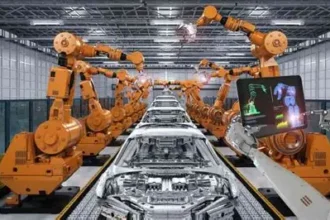
Have you ever wondered how large factories produce thousands of products every day without chaos? Or how delivery companies manage to ship millions of packages on time? Or even how hospitals organize staff, beds, and equipment to serve patients efficiently?
Behind these operations, there is usually one key professional: the industrial engineer.
Industrial engineering is one of the most strategic and versatile branches of engineering because it doesn’t focus only on machines or buildings. Instead, it focuses on systems, people, processes, and results. Its main goal is simple but powerful: do more with less, without sacrificing quality.
(You will be redirected to another page)
If you want to understand how companies reduce costs, increase productivity, eliminate waste, and improve customer satisfaction, this complete guide will explain what industrial engineering is, how it works, where it is applied, and why it has become one of the most valuable careers in the modern business world.
What is industrial engineering?
Industrial engineering is the field of engineering dedicated to improving processes, systems, and organizations. Instead of designing a single machine or product, industrial engineers design the way work happens.
They analyze how people, materials, information, and technology interact inside a company and then create smarter, faster, and more efficient ways to operate.
In simple terms, while other engineers might build a machine, industrial engineers figure out how to use that machine in the best possible way.
Their focus includes:
-
Reducing waste
-
Saving time
-
Cutting unnecessary costs
-
Improving productivity
-
Increasing quality
-
Making workflows smoother
Because of this broad perspective, industrial engineers often act as problem-solvers and strategists inside businesses.
Why industrial engineering is so important today
Modern businesses operate in highly competitive markets. Customers expect faster deliveries, lower prices, and better quality. Companies that fail to optimize their processes often lose money and fall behind competitors.
This is where industrial engineering becomes essential.
Small inefficiencies repeated thousands of times can cost millions of dollars per year. For example:
A worker walking extra steps all day
Machines waiting idle between tasks
Poor inventory control causing delays
Too many manual processes that could be automated
Industrial engineers identify these hidden problems and redesign the system to make everything flow better.
Even saving a few seconds per task can create huge improvements when multiplied across thousands of operations.
That’s why companies across manufacturing, healthcare, logistics, retail, and technology actively hire industrial engineers.
(You will be redirected to another page)
How industrial engineering improves productivity
Productivity means producing more output with the same or fewer resources.
Industrial engineers improve productivity by carefully studying how work is performed. They observe processes, collect data, and measure performance.
For example, in a factory, they may analyze:
How long each task takes
How workers move between stations
How materials are transported
Where delays occur
After collecting information, they redesign the workflow. They might rearrange equipment, change task order, or introduce automation.
These small adjustments often create major results.
Imagine reducing the assembly time of a product from 10 minutes to 8 minutes. That seems small, but over 10,000 units, it saves more than 300 hours of work.
This is the power of industrial engineering.
How efficiency reduces costs and waste
Efficiency means using fewer resources to achieve the same result.
Every business deals with limited resources: time, money, materials, and labor. Waste in any of these areas reduces profits.
Industrial engineers focus heavily on eliminating waste.
Common types of waste include:
Waiting time
Excess inventory
Unnecessary transportation
Defects and rework
Overproduction
Unnecessary movements
By identifying and removing these inefficiencies, companies spend less and earn more.
For example, better inventory planning prevents products from sitting in storage for months. Faster workflows reduce overtime costs. Improved quality reduces returns and repairs.
All of this directly improves a company’s bottom line.
Main areas of industrial engineering
Industrial engineering covers many different areas, which makes it extremely flexible as a career.
One major area is operations management. Engineers design efficient production systems and ensure everything runs smoothly.
Another area is supply chain and logistics. They manage how materials move from suppliers to factories and then to customers. Faster and smarter logistics reduce costs and delivery times.
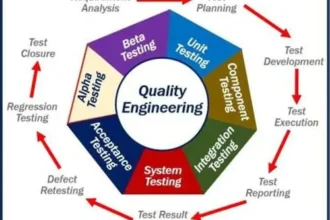
Quality engineering focuses on reducing errors and improving product standards. Engineers create testing systems and processes that ensure consistency.
Process optimization involves analyzing workflows and redesigning them for maximum efficiency.
Data analysis and decision science are also growing areas. Engineers use statistics and software tools to make better business decisions based on real data.
Because of this variety, industrial engineers can work in almost any industry.
(You will be redirected to another page)
Where industrial engineers work
Unlike many engineering fields that are limited to specific industries, industrial engineering applies almost everywhere.
In manufacturing, they improve production lines and reduce defects.
In hospitals, they optimize patient flow, reduce waiting times, and manage staff schedules.
In logistics companies, they design faster delivery routes and smarter warehouse layouts.
In retail, they forecast demand and manage inventory.
In offices, they streamline administrative processes and automate repetitive tasks.
Even tech companies hire industrial engineers to improve operations and scale efficiently.
This wide range of opportunities makes industrial engineering one of the most versatile degrees available.
Tools and methods used by industrial engineers
Industrial engineers rely on many proven tools and techniques.
Lean manufacturing focuses on eliminating waste and maximizing value.
Six Sigma reduces defects and improves quality through data analysis.
Time and motion studies measure how long tasks take and identify unnecessary steps.
Process mapping visually represents workflows to detect bottlenecks.
Simulation software tests improvements before implementing them in real life.
Data analytics helps engineers make decisions using numbers instead of guesses.
These tools allow them to approach problems scientifically and create measurable improvements.
Skills needed to succeed in industrial engineering
Industrial engineering requires both technical and human skills.
Strong analytical thinking is essential because engineers must interpret data and solve complex problems.
Mathematics and statistics are important for measuring performance and making accurate predictions.
Communication skills are critical since they work with managers, workers, and teams across departments.
Problem-solving ability helps them identify root causes instead of just fixing symptoms.
Leadership skills are also valuable because many industrial engineers manage projects and teams.
Finally, adaptability is key. Every company is different, so engineers must quickly understand new environments.
Career opportunities and salary potential
Industrial engineering offers excellent career prospects.
Entry-level roles often include process analyst or operations assistant positions. With experience, professionals can become project managers, consultants, or operations directors.
Many industrial engineers move into leadership and executive roles because they understand both technical and business aspects.
Salaries are generally competitive, especially in industries like logistics, technology, and manufacturing.
Freelancing and consulting are also common. Companies often hire experts to optimize specific processes temporarily.
Because businesses always seek efficiency, industrial engineers remain in demand even during economic downturns.
How to start learning industrial engineering
If you’re interested in this field, the first step is education.
Most professionals earn a degree in industrial engineering, production engineering, or operations management.
During studies, students learn statistics, optimization, logistics, economics, and process design.
Practical experience is extremely important. Internships, case studies, and real projects help develop problem-solving skills.
Learning software tools like Excel, Power BI, or simulation programs can provide a big advantage.
Studying business concepts is also useful because industrial engineering sits between engineering and management.
The future of industrial engineering
The future looks very promising for this field.
Automation, artificial intelligence, and digital transformation are changing how companies operate. Industrial engineers play a central role in implementing these technologies efficiently.
Smart factories, robotics, and data-driven decisions are becoming standard.
Companies that fail to optimize processes will struggle to compete, which means demand for industrial engineers will continue growing.
As businesses become more complex, the need for professionals who can simplify and improve systems will only increase.
Final thoughts
Industrial engineering is not just about machines or factories. It’s about making the world work better.
From hospitals to warehouses, from startups to multinational companies, industrial engineers help organizations save time, reduce waste, and deliver better results.
If you enjoy solving problems, analyzing systems, and improving how things operate, this career offers endless opportunities and strong financial potential.
In a world where efficiency defines success, industrial engineering is one of the most powerful skills you can have.
 Keep an eye on this