Look around you right now. The fan cooling your room, the refrigerator preserving your food, the car on the street, the elevator in your building, and even the laptop you’re using all have one thing in common: they depend on mechanical engineering.
Most people interact with machines all day without ever thinking about how they were designed, tested, and built. Behind every moving part, motor, or system that converts energy into motion, there is usually a mechanical engineer.
(You will be redirected to another page)
Mechanical engineering is one of the broadest and most versatile engineering fields in the world. It combines physics, mathematics, materials, and creativity to design machines that make life easier, faster, and more efficient. If you’re curious about how things work or thinking about a career that offers stability, innovation, and high demand, this complete guide will help you understand everything about mechanical engineering in a clear and practical way.
What is mechanical engineering?
Mechanical engineering is the branch of engineering responsible for designing, building, and improving machines, tools, engines, and mechanical systems. In simple terms, it focuses on anything that moves or uses energy to perform a task.
Mechanical engineers work with forces, motion, heat, and energy. They design systems that transform energy into useful work. For example, a car engine converts fuel into movement, and an air conditioner transfers heat to cool a room. These processes are all part of mechanical engineering.
This field is considered one of the oldest forms of engineering because humans have been building tools and machines for thousands of years. Today, it remains one of the most important areas supporting industries like transportation, manufacturing, robotics, energy, and aerospace.
Why mechanical engineering is important in everyday life
Mechanical engineering is everywhere, even if you don’t notice it.
When you open your refrigerator, mechanical systems keep your food fresh. When you ride a bus or drive a car, complex engines and braking systems ensure safe transportation. When factories produce goods, machines and automated systems make mass production possible.
Without mechanical engineering, modern life would slow down dramatically. Many of the comforts and conveniences we take for granted simply wouldn’t exist.
Beyond convenience, mechanical engineers also improve safety and efficiency. They design stronger vehicles, more reliable machines, and energy-saving technologies that reduce costs and environmental impact.
In short, mechanical engineering helps society function smoothly while constantly improving quality of life.
(You will be redirected to another page)
How mechanical engineers solve problems
Mechanical engineers are professional problem solvers. Their work usually follows a structured process.
First, they identify a need or challenge. For example, a company might want a faster production machine or a more fuel-efficient engine. Then the engineer researches possible solutions and studies the technical requirements.
Next comes the design phase. Using software tools and calculations, engineers create detailed models of parts and systems. They test these designs through simulations to predict performance and safety.
After that, prototypes are built and tested in real life. Engineers measure results, find weaknesses, and improve the design. Once everything works correctly, the final product is manufactured and released.
This combination of analysis, testing, and improvement ensures machines are safe, efficient, and durable.
Main areas within mechanical engineering
Mechanical engineering is very broad, which means professionals can specialize in different areas depending on their interests.
One important area is automotive engineering. These engineers design cars, motorcycles, trucks, and electric vehicles. They work on engines, transmissions, brakes, and safety systems.
Another area is thermal engineering, which focuses on heat and energy transfer. This includes air conditioners, refrigerators, power plants, and heating systems.
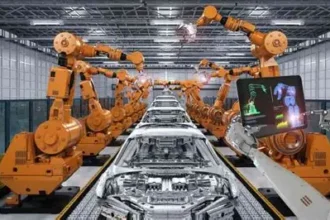
Manufacturing engineering deals with production processes. Engineers design machines and assembly lines that build products faster and with fewer errors. This is essential in factories around the world.
Robotics and automation are growing rapidly. Mechanical engineers design robots, automated arms, and smart machines that replace repetitive or dangerous tasks.
Aerospace engineering is another exciting path. These professionals work on aircraft, drones, and spacecraft, designing components that must be extremely strong yet lightweight.
Because the field is so diverse, mechanical engineers can explore many industries throughout their careers.
Skills required to succeed in mechanical engineering
Mechanical engineering requires both technical knowledge and practical thinking.
A strong foundation in mathematics and physics is essential. Engineers use formulas and calculations daily to understand forces, motion, and energy.
Problem-solving skills are equally important. Machines rarely work perfectly the first time, so engineers must analyze issues and find better solutions.
Creativity also plays a big role. Designing a new product often means thinking differently and finding innovative ways to improve performance.
Attention to detail is critical because small mistakes can lead to mechanical failure or safety risks. Precision matters in every design.
Teamwork and communication skills help engineers collaborate with designers, technicians, and managers. Projects usually involve many people working together.
Finally, curiosity is a powerful advantage. The desire to understand how things work is what drives great mechanical engineers.
(You will be redirected to another page)
Career opportunities and job market
Mechanical engineering offers excellent job opportunities and strong job security. Since machines are used in nearly every industry, demand for mechanical engineers remains high worldwide.
Graduates can work in automotive companies, factories, energy plants, construction firms, technology startups, or research labs. Some choose office-based design jobs, while others prefer hands-on work in workshops or industrial environments.
Entry-level salaries are usually competitive, and experienced engineers can earn significantly more, especially in leadership or specialized roles. Freelance consulting and entrepreneurship are also possible career paths.
Another advantage is flexibility. Skills learned in mechanical engineering can be applied to many sectors, allowing professionals to change industries without starting over.
How to start a career in mechanical engineering
The first step toward becoming a mechanical engineer is formal education. Most professionals complete a degree in mechanical engineering or a related field.
During university, students study subjects like mechanics, thermodynamics, materials science, and machine design. These subjects form the technical foundation needed to solve real-world problems.
Internships are extremely valuable because they provide hands-on experience and help students understand how engineering works outside the classroom.
Learning design software such as CAD programs is also essential. These tools are widely used for creating technical drawings and 3D models.
Building personal projects, joining competitions, or participating in engineering clubs can further strengthen your skills and resume.
The future of mechanical engineering
Mechanical engineering continues to evolve with technology. Today, engineers are working on electric vehicles, renewable energy systems, smart manufacturing, and advanced robotics.
Sustainability is becoming a major focus. Companies want machines that consume less energy and produce less waste. Mechanical engineers play a key role in designing eco-friendly solutions.
Automation and artificial intelligence are also transforming factories. Smart machines that can operate independently are becoming more common, creating exciting new challenges and opportunities.
As technology advances, mechanical engineers will remain essential in building the tools and systems that power the modern world.
Final thoughts
Mechanical engineering is a dynamic and rewarding field that touches nearly every part of our lives. From the smallest household appliance to massive industrial machines, mechanical engineers are behind the design and operation of countless technologies.
If you enjoy understanding how things move, solving practical problems, and creating systems that make life easier, this career path can offer stability, growth, and personal satisfaction.
The world will always need better machines, smarter systems, and more efficient technology. And mechanical engineers will always be the professionals making that progress possible.
 Keep an eye on this